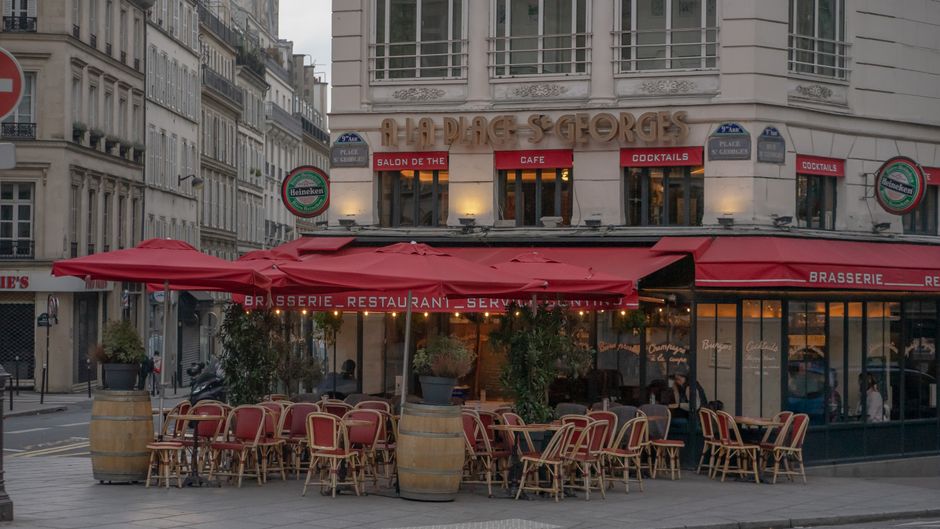
 Photo by Paul on Pexels
How to Ask for Directions in Spanish
Learn how to ask for directions in Spanish: key phrases, formal usted commands, prepositions of place like cerca de and enfrente de, plus practice exercises.
You're standing at a corner in Cusco, backpack straps digging into your shoulders, completely sure the hostel was "just past the plaza" — except now there are three plazas in sight and none of them look right. You could pull out your phone. Or you could stop the next person walking by and ask, in real Spanish, how to get there. Asking for directions is one of the very first survival skills every Spanish learner needs, and it's also one of the most forgiving: you don't need a huge vocabulary to have this exact conversation today.
That's what makes this topic worth learning properly rather than winging it. Asking for directions in Spanish isn't just about memorizing "¿dónde está...?" — the real skill is understanding the answer that comes back, since a stranger on the street won't slow down or simplify for a learner the way a textbook dialogue does. This post covers both halves: the phrases you'll use to ask, and the vocabulary and grammar you need to actually follow the reply, so the exchange doesn't end the moment the other person starts talking.
Every directions exchange starts with getting someone's attention politely, and Spanish has two standard ways to do that. "Disculpe" (dees-KOOL-peh) — excuse me — is the safer, more broadly polite choice with a stranger, while "perdone" (pehr-DOH-neh) — sorry to bother you — works just as well and is common across Spain and Latin America. Both are built on the formal usted register, which matters here: with a stranger on the street, you default to formal, not the tú you'd use with a friend. Once you have their attention, there are two core question patterns. "¿Dónde está...?" (DOHN-deh es-TAH) — where is...? — works for naming a specific place: "Disculpe, ¿dónde está la estación de tren?" (excuse me, where is the train station?). "¿Cómo llego a...?" (KOH-moh YEH-goh ah) — how do I get to...? — asks for the route itself rather than just a location, and it's the better choice once you already roughly know where something is and need the path there: "¿Cómo llego al centro desde aquí?" (how do I get downtown from here?). A shorter, very natural variant many learners skip is simply "¿Está cerca?" (is it close?) or "¿Está lejos?" (is it far?) — useful on its own before you commit to walking anywhere.
Understanding the answer is the part that actually determines whether the exchange works, so it's worth learning as one block before you ever need it live. "Todo recto" or "todo derecho" (TOH-doh REHK-toh / deh-REH-choh) means straight ahead. "A la izquierda" (ah lah ees-KYEHR-dah) means to the left, and "a la derecha" (ah lah deh-REH-chah) means to the right. "En la esquina" (en lah ess-KEE-nah) means at or on the corner. "La cuadra" (lah KWAH-drah) means the block in Latin America, while Spain uses "la manzana" for the same idea. "Cruce la calle" (KROO-seh lah KAH-yeh) means cross the street, "siga" (SEE-gah) means continue or keep going, "doble" or "gire" (DOH-bleh / HEE-reh) both mean turn, and "al final de la calle" (ahl fee-NAHL deh lah KAH-yeh) means at the end of the street. [AUDIO: todo recto] [AUDIO: a la izquierda] A typical reply strings several of these together in sequence: "Siga todo recto dos cuadras, luego doble a la derecha en la esquina" (keep going straight two blocks, then turn right at the corner). Notice these aren't random new words — siga and doble are commands, which brings up the one piece of grammar that makes this whole topic click.
Spanish directions are almost always given as commands, and because you're talking to a stranger, they come in the formal usted form, not the informal tú form you may have learned first. For regular verbs, the formal command is built off the "yo" form of the present tense: drop the -o and add the opposite-vowel ending. Seguir (to continue) goes yo sigo to the command siga. Girar (to turn) goes yo giro to the command gire. Doblar (to turn) goes yo doblo to the command doble. Cruzar (to cross) goes yo cruzo to the command cruce, with a spelling shift that keeps the hard /s/ sound. The most common learner mistake here isn't the vocabulary — it's reaching for tú commands like sigue or dobla out of habit, since those are often taught first. Using an informal command with a stranger isn't offensive, but it sounds noticeably off, the same way answering a stranger's question in slang would in English. Default to the usted forms above whenever you're the one asking, and you'll match what you actually get back.
The last piece is knowing exactly where something is relative to a landmark, which relies on a small set of prepositions almost always paired with estar, since location in Spanish is always estar, never ser. "Cerca de" (SEHR-kah deh) means near, and "lejos de" (LEH-hohs deh) means far from — both set the general distance: "El banco está cerca de la plaza" (the bank is near the plaza). "Al lado de" (ahl LAH-doh deh) means next to, and "enfrente de" (en-FREN-teh deh) means in front of or across from — both pin down an exact spot: "La farmacia está enfrente del hotel" (the pharmacy is across from the hotel). "Entre" (EN-treh) means between, and "detrás de" (deh-TRAHS deh) means behind, rounding out the set: "El museo está entre el café y la librería" (the museum is between the café and the bookstore).
A cultural note worth knowing before you travel: many Latin American cities, especially in Argentina, Colombia, and much of Mexico, were laid out on a numbered grid, so directions often lean on numbers instead of landmarks — "está en la calle 23, entre la 5 y la 6" (it's on 23rd Street, between 5th and 6th). In Spain, especially in older cities like Toledo or Seville, streets wind and change names block to block, so directions lean much more heavily on landmarks and turns than on a predictable grid — expect to hear "al lado de la iglesia" far more often than a street number.
Picture yourself actually lost near a market in Oaxaca. You'd open politely and name your destination: "Disculpe, ¿cómo llego al mercado central?" (excuse me, how do I get to the central market?). The reply might come back as a short sequence: "Todo recto dos cuadras, y está a la izquierda, al lado de la farmacia" (straight ahead two blocks, and it's on the left, next to the pharmacy). If you didn't catch it the first time, "¿Puede repetir, por favor?" (can you repeat, please?) is a completely normal, expected follow-up — nobody will mind being asked to say it again more slowly.
Try it yourself. Fill in the blank with the formal command: "___ (girar) a la derecha en la esquina." Fill in the blank with a preposition of place: "El hotel está ___ del banco" (across from). Translate to Spanish: "Excuse me, where is the post office?" Translate to Spanish: "Keep going straight and turn left at the end of the street." Multiple choice: which is the correct formal command for seguir — "sigue" or "siga"? Translate to Spanish, using estar: "The museum is between the café and the park."
Answer key: "Gire a la derecha en la esquina" (the formal command, from giro to gire). "El hotel está enfrente del banco" (across from, always with estar). "Disculpe, ¿dónde está el correo?" "Siga todo recto y doble a la izquierda al final de la calle." "Siga" is correct for a stranger — "sigue" is the informal tú form. "El museo está entre el café y el parque."
Three things to carry forward: lead with a polite disculpe or perdone and the formal usted register, since you're almost always asking a stranger. Learn the small set of direction commands — siga, doble, gire, cruce — as a group, since a real answer will usually chain two or three of them together. And remember that location always takes estar, whether you're using cerca de, enfrente de, or entre to pin down exactly where something is. Ready to make this automatic? Try a round of Exercises to drill directions in context, or browse Vocabulary for more everyday building blocks like this one.