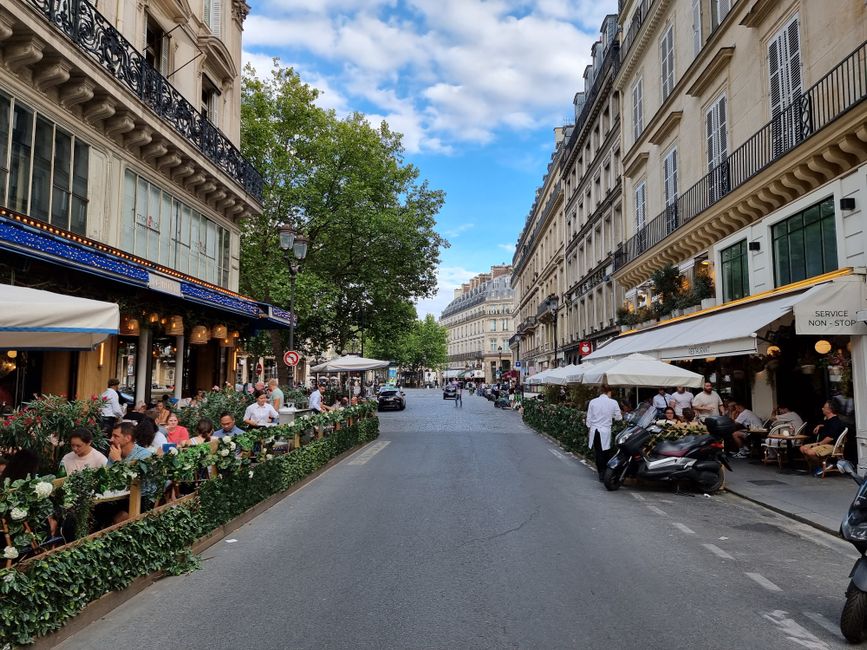
 Photo by Zak H on Pexels
How to Order at a French Café: Phrases and Etiquette
Freezing up at a French café counter? Here is the vocabulary, the polite je voudrais phrasing, and the unwritten etiquette that make ordering feel natural.
You step up to the counter of a French café, the barista glances up, and every phrase you rehearsed on the plane evaporates. You end up pointing at a pastry and mumbling something halfway between English and French, and get a faint, amused nod back. Ordering a coffee should be the easiest exchange in the language -- and yet it's one of the exchanges that trips up beginners fastest, because it's not really a vocabulary problem. It's a tiny piece of etiquette that most textbooks skip entirely.
This matters more than it looks like it should, because a French café isn't just a coffee shop -- it's a small, ritualized social exchange, and getting the ritual right (or wrong) gets noticed faster than a shaky verb conjugation ever would. If you're planning a trip to France, or you just want your first unscripted French conversations to go smoothly, ordering at a café is very likely the first real exchange you'll have with a stranger who owes you nothing and isn't grading your homework. Get comfortable with this one small ritual, and a surprising amount of your nervousness about "real" French conversation goes with it.
The single biggest rule, and the one most phrasebooks bury on page two instead of page one, is this: say bonjour (bohn-zhoor) -- hello -- before you say anything else, even before you order. Walking up and saying "un café" with no greeting first is one of the fastest ways to come across as rude in France, more so than almost any grammar mistake you could make right after it. The same goes for merci (mehr-see) -- thank you -- and au revoir (oh ruh-vwahr) -- goodbye -- on your way out. French service exchanges are bracketed by these small courtesies even in the most routine transaction, and skipping them registers instantly, even with someone who won't understand a single other word you say.
A small, fixed set of words and phrases covers almost every café order you'll ever need to make. Un café (uhn kah-fay) -- an espresso, the default meaning of "coffee" in France. Un café allongé (uhn kah-fay ah-lohn-zhay) -- an espresso lengthened with hot water, the closest thing to American-style coffee. Un café au lait (uhn kah-fay oh leh) -- coffee with milk. Un croissant (uhn krwah-sahn) -- a croissant. Une baguette (ewn bah-guet) -- a baguette. Je voudrais... (zhuh voo-dreh) -- I would like... C'est combien ? (seh kohn-byan) -- how much is it? L'addition, s'il vous plaît (lah-dee-see-ohn seel voo pleh) -- the check, please. Sur place ou à emporter ? (sewr plahs oo ah ahn-por-tay) -- for here or to go? -- a question you'll be asked back, so it's worth recognizing even more than producing it yourself.
Here's the grammar point worth knowing cold before you order anything: je voudrais, not je veux, is the polite way to ask for something. Both come from the verb vouloir (to want), but je veux is the plain present tense -- literally "I want" -- while je voudrais is the conditional form, softening the request the same way English softens "I want a coffee" into "I'd like a coffee." Je veux isn't grammatically wrong at a counter, but it can land as blunt, even a little demanding, especially coming from a stranger. Je voudrais is the form native speakers actually reach for when ordering, asking a favor, or requesting anything from someone they don't already know well. If you take only one grammar swap away from this whole post, make it this one -- it does more for how polite you sound in daily French than almost anything else you could learn this week.
A French café table also comes with an unwritten right that catches a lot of visitors off guard: once you've ordered, that table is yours for as long as you want it, whether you finish your espresso in five minutes or nurse it for two hours while watching the street go by. No server will hover with the check or clear your cup early, because rushing a customer along is considered poor form, not good service. Tipping works differently here too -- French law requires service compris (service included) to already be built into the listed price, so there's no obligatory 15-20 percent tip the way there is in the United States. Leaving a euro or two in coins for good service is a kind gesture, not an expectation, and no one will chase you down the street if you don't.
Picture the actual exchange you're about to have. You walk up to the counter, or a server comes to your terrace table. You start: Bonjour ! Je voudrais un café allongé et un croissant, s'il vous plaît. (Hello! I'd like a lengthened coffee and a croissant, please.) They might ask: Sur place ou à emporter ? -- answer c'est pour ici (it's for here) if you're staying, or à emporter (to go) if you're not. When you're ready to leave, catch their eye and say L'addition, s'il vous plaît, then merci and au revoir on your way out. That's the entire ritual, start to finish, in five short lines -- and every one of those lines is something you already have in the vocabulary above.
Try it yourself. Fill in the blank: ___, je voudrais un café, s'il vous plaît -- what's the one word you should never skip before ordering? Multiple choice: which is the more polite way to order -- je veux un café or je voudrais un café? Translate to French: "The check, please." Translate to French: "For here or to go?" True or false: a 15-20 percent tip is legally required on top of a café bill in France. Fill in the blank: un café ___ is an espresso lengthened with hot water.
Answer key: the missing word is Bonjour -- it always comes before the order, not after. Je voudrais un café is the more polite version, since je voudrais softens the request the way "I'd like" does in English. "The check, please" is L'addition, s'il vous plaît. "For here or to go?" is Sur place ou à emporter ? The tip statement is false -- service compris means service is already included in the listed price, so any extra is optional. The missing word is allongé.
Three things to carry into your next café visit: always open with bonjour before you order anything else, reach for je voudrais instead of je veux so you sound naturally polite rather than blunt, and remember that your table is yours for as long as you want it, tip or no tip. This one small ritual is one of the most common real conversations you'll have in France, so it's worth having down cold before you land. Ready to keep building? Head over to Vocabulary for more everyday phrases, or try a round of Exercises to drill je voudrais until it's automatic.