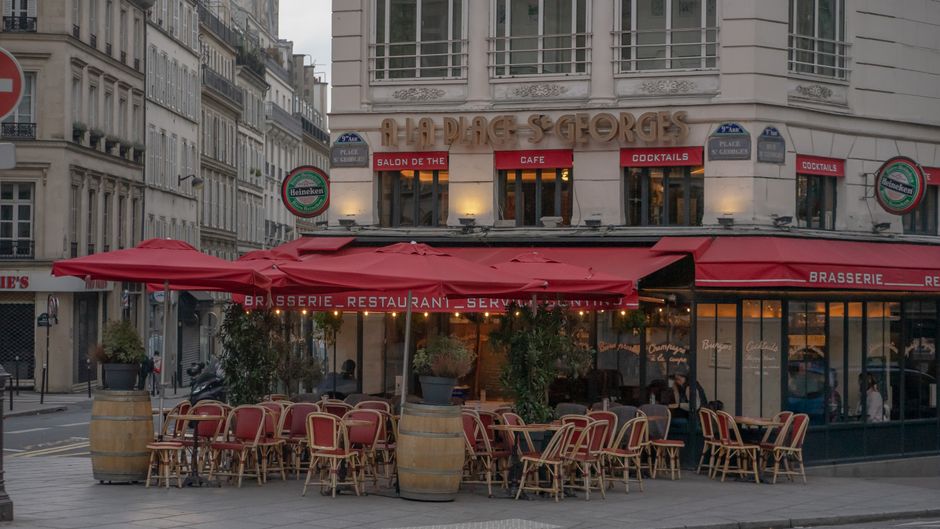
 Photo by Paul on Pexels
French Unisex Names: Camille, Dominique & More
Camille, Dominique, Claude, and Sacha work for any gender in French. Learn which French first names are truly unisex and how gender agreement really works.
Add a French pen pal on a language app, and the first message from someone named Camille leaves you stuck on a detail you didn't expect: is that a "he" or a "she"? You can't tell from the name itself, and guessing wrong in your very first reply is an awkward way to start things off. Camille isn't a fluke — French has a whole set of first names that work equally well for men and women, spelled exactly the same way, and once you know which ones they are, you'll never have to guess again.
This matters for more than politeness. French grammar leans hard on gender — adjectives, past participles, even the word for "friend" change form depending on who they describe — so when a name itself gives you no clue, you need to know where else to look. French unisex names, sometimes called prénoms mixtes (shared first names) or, more formally, prénoms épicènes (gender-neutral names), turn up constantly in French news, novels, and everyday conversation. This post covers the most common ones, how French actually signals gender around them, and how to write to someone whose gender you genuinely don't know.
What Makes a French Name Unisex
A French unisex name isn't a name with two spellings, one for each gender — that's a different, more common pattern, where Jean becomes Jeanne or Louis becomes Louise by adding a feminine ending. A true unisex name keeps one single spelling and one single pronunciation for everyone who carries it; only the words around it change to show whether the person being discussed is a man or a woman.
Key Phrases
- un prénom mixte (uhn pray-nohm meeks) — a shared, unisex first name
- un prénom épicène (uhn pray-nohm ay-pee-sen) — a gender-neutral name, the formal linguistic term
- au féminin (oh fay-mee-nan) — in the feminine form
- au masculin (oh mas-kew-lan) — in the masculine form
The Most Common French Unisex Names
Some of these names have worked for both genders for centuries; others only became genuinely unisex in the last few decades. Here are the ones you're most likely to run into:
- Camille (kah-mee) — historically the more common choice for boys; now given to roughly as many girls, and borne by both the sculptor Camille Claudel and the composer Camille Saint-Saëns
- Dominique (doh-mee-neek) — from the Latin for "belonging to the Lord"; used equally often for men and women, with no lean toward either
- Claude (klohd) — worn by the painter Claude Monet and, quite deliberately, by the artist Claude Cahun, who chose the name for how thoroughly it hides gender
- Sacha (sah-shah) — a French form of the Russian nickname for Alexandre/Alexandra that has become one of the country's most popular first names for both boys and girls
- Charlie (shar-lee) — traditionally masculine, now increasingly given to girls as well
- Alix (ah-leeks) — an older, aristocratic name carried by both princes and princesses in medieval France
France hasn't always allowed this kind of freedom. Until a 1993 reform of the country's civil-status law, parents had to choose a first name from an approved list, made up mostly of saints' names, and a registrar could reject anything that fell outside it. Once that restriction lifted, unusual spellings and gender-blurring choices multiplied — part of why names like Sacha and Charlie went from rare imports to genuine unisex staples within a generation.
How French Actually Signals Who You Mean
Here's the part that trips learners up: a name like Camille has no grammatical gender of its own, the way ami (male friend) and amie (female friend) do. The gender comes entirely from the words wrapped around the name — articles, adjectives, and past participles built with être — and those words agree with the real, living person, never with how the name happens to be spelled.
Grammar Note
Once you know — or find out — whether the Camille or Dominique you're talking about is a man or a woman, every describing word around that name has to match. The name itself never changes.
- Mon ami Dominique est arrivé hier. (my friend Dominique — a man — arrived yesterday)
- Mon amie Dominique est arrivée hier. (my friend Dominique — a woman — arrived yesterday)
- Common mistake: assuming a name ending in -e must be feminine — Camille and Claude both end in -e and are historically male names
- Common mistake: agreeing adjectives with the spelling of the name instead of with the actual person it refers to
Writing to Camille Without Guessing Wrong
This isn't just trivia — it shows up the moment you write a formal email in French. Say a hotel booking or a work introduction arrives signed only "Camille Dubois." A casual "Salut Camille" sidesteps the issue, but formal French correspondence traditionally opens with "Cher [name]" for a man or "Chère [name]" for a woman, and picking the wrong one is a small but real stumble.
- Default to "Bonjour Camille," — it needs no gender at all and reads as perfectly professional in almost any French context.
- Look for a clue before committing to Cher/Chère — a signature, a job title with its own gendered ending (directeur vs. directrice), or a reply to an email where they signed off first.
- Use the newer hedge if you truly can't tell — French professional writing increasingly accepts "Cher·Chère Camille," when the gender is genuinely unknown.
Practice Exercises
- Fill in the blank: Mon ami Dominique ___ (arriver) ce matin. — Dominique is a man.
- Fill in the blank: Mon amie Dominique ___ (arriver) ce matin. — Dominique is a woman.
- Multiple choice: which of these is not a traditionally unisex French first name? (a) Camille (b) Philippe (c) Dominique (d) Claude
- Translate into French, with correct agreement: "My friend Camille (a woman) is very happy today."
- True or false: in French, a first name ending in -e is always feminine.
- Fill in the blank: you're emailing someone named Claude and have no idea if they're a man or a woman. The safest opener is "___ Claude,"
Answer Key
- est arrivé
- est arrivée
- (b) Philippe — it's traditionally and almost exclusively masculine
- Mon amie Camille est très contente aujourd'hui.
- False — Camille and Claude are two well-known counterexamples
- Bonjour Claude,
One Name, Both Genders
- A true unisex French name, or prénom épicène, keeps one spelling for everyone — Camille, Dominique, Claude, Sacha, Charlie, and Alix are the ones you'll meet most often.
- The name itself never reveals gender; the adjectives, past participles, and words like ami/amie built around it do the work.
- When you genuinely don't know, "Bonjour [name]," sidesteps the whole problem — no guessing required.
Next time you spot one of these names in a French article, a film credit, or your own inbox, take a second to notice which words around it are doing the gendering — it's some of the best real-world grammar practice you'll get for free. And if your own language has a unisex name that always confuses French speakers, tell us about it in the comments.