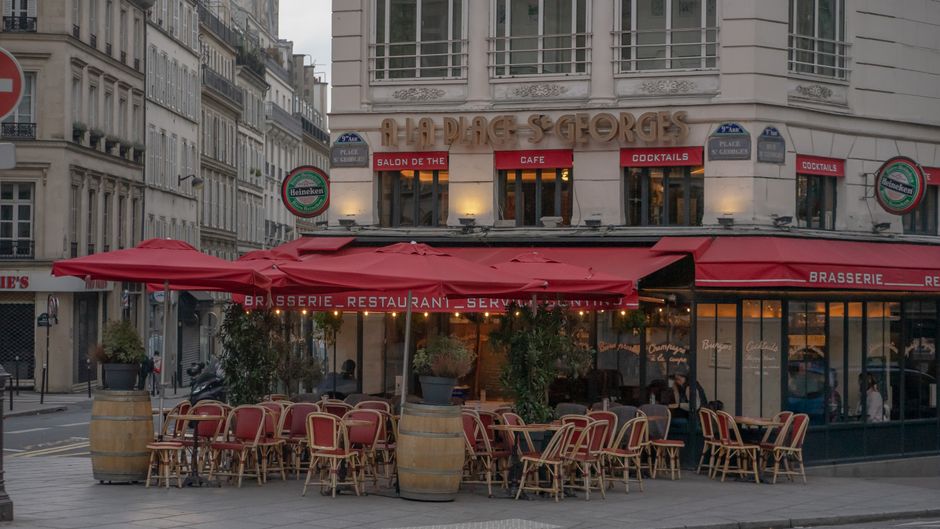
 Photo by Paul on Pexels
French Avoir Expressions: Idioms That Trip Up Learners
In French you don't feel hungry or scared -- you "have" them. Avoir expressions like avoir faim trip up English speakers fast, and confusing être makes it worse.
Imagine you're in a stuffy Paris apartment in August, fanning yourself, and you want to say the obvious: "I'm hot." You reach for être -- the verb you'd use for almost every other description -- and say je suis chaud (or chaude, if you're a woman). The room goes quiet, then someone smirks. What you just said doesn't mean "the temperature is bothering me" -- je suis chaud reads as a claim that you're sexually available, not sweaty. The sentence you actually needed swaps être for avoir: j'ai chaud (I have heat -- meaning "I'm hot").
That mix-up isn't a random exception to memorize and forget. It's the first sign of a pattern that runs through dozens of the most common everyday expressions in French: where English pairs "to be" with an adjective to describe a physical or emotional state -- I'm hungry, I'm scared, I'm right -- French very often pairs avoir (to have) with a noun instead -- j'ai faim, j'ai peur, j'ai raison. English speakers default to être because that's the verb their own language would use, and the result is either a sentence that's simply wrong or, as above, one that means something else entirely. Once this pattern clicks, a huge slice of everyday French -- ordering food, describing how you feel, agreeing or disagreeing with someone -- gets noticeably easier to produce correctly, on the first try, without translating word for word in your head.
Start with the physical states, since they come up constantly. Avoir faim (ah-vwahr fahn) -- to be hungry, literally "to have hunger." Avoir soif (ah-vwahr swahf) -- to be thirsty. Avoir chaud (ah-vwahr shoh) -- to be hot. Avoir froid (ah-vwahr frwah) -- to be cold. Avoir sommeil (ah-vwahr soh-may) -- to be sleepy. Avoir mal (ah-vwahr mahl) -- to be in pain, almost always paired with à and a body part: avoir mal à la tête (a headache), avoir mal au ventre (a stomachache) -- note au there, the contraction of à + le you'd use with any masculine body part. In every one of these, the noun after avoir takes no article at all -- it's avoir faim, never avoir de la faim -- which is the opposite of how French usually treats nouns, and worth noting as the exception it is.
The same avoir-plus-noun pattern covers emotional and judgment states just as often. Avoir peur (de) (ah-vwahr puhr) -- to be afraid (of). Avoir honte (ah-vwahr ohnt) -- to be ashamed. Avoir raison (ah-vwahr reh-zohn) -- to be right. Avoir tort (ah-vwahr tohr) -- to be wrong. Avoir de la chance (ah-vwahr duh lah shahns) -- to be lucky. Avoir hâte de (ah-vwahr aht duh) -- to look forward to. Avoir envie de (ah-vwahr ahn-vee duh) -- to feel like, to want. Avoir besoin de (ah-vwahr buh-zwan duh) -- to need. Notice the last three all take de before whatever follows, whether that's a noun or an infinitive: j'ai envie de dormir (I feel like sleeping), j'ai besoin d'aide (I need help) -- the de is part of the expression, not optional.
Avoir itself is irregular, so it's worth having the present tense solid before leaning on these expressions in conversation: j'ai, tu as, il/elle/on a, nous avons, vous avez, ils/elles ont. The single most common mistake -- the one from the opening scene -- is reaching for être out of habit, since that's what English "to be" would suggest: je suis faim, je suis peur, and je suis chaud are all wrong, or in that last case, wrong in an actively awkward way. The second most common mistake is intensifying with the wrong word: these expressions take très directly before the noun -- j'ai très faim, j'ai très peur -- not vraiment, even though très normally modifies adjectives, not nouns, everywhere else in French.
These expressions aren't textbook fossils -- they're what you'll actually hear in daily life. A waiter checking on your table might ask vous avez faim ? rather than anything about being hungry in the abstract; a doctor will ask où avez-vous mal ? (where does it hurt?) rather than reaching for a more clinical phrase. The pattern is productive in slang, too -- avoir la pêche (literally "to have the peach") is a common informal way to say you're feeling great, full of energy, and avoir le cafard ("to have the cockroach") means to feel down or blue. Once you notice avoir doing this job, you'll start hearing it everywhere, in registers from a doctor's office to a text message from a friend.
Picture a normal Saturday: a friend texts you around noon, tu as faim ? On va manger un truc ? (Are you hungry? Should we go grab something to eat?) You reply oui, j'ai super faim, on y va ! (yes, I'm starving, let's go!) -- super working here exactly the way "super" works in casual English, as an intensifier bolted onto a normal sentence. Later, waiting for a table, you might add j'ai un peu froid, on peut s'asseoir à l'intérieur ? (I'm a bit cold, can we sit inside?). Every one of those lines follows the same shape: avoir, conjugated for the subject, plus the noun -- no être in sight, and no article before faim or froid.
Try it yourself. Fill in the blank with the correct form of avoir: elle ___ soif après le sport. (she's thirsty after sports) Fill in the blank: nous ___ vraiment hâte de te voir. (we're really looking forward to seeing you) Translate to French: "I'm scared of the dark." Translate to French: "They (masculine) are right." Multiple choice: which is correct -- je suis très faim, j'ai très faim, or j'ai vraiment faim? Fix the mistake in this sentence: Je suis peur des chiens.
Answer key: the first blank is a -- elle a soif après le sport. The second is avons -- nous avons vraiment hâte de te voir. "I'm scared of the dark" is j'ai peur du noir (peur de + le contracts to du). "They are right" is ils ont raison. The multiple-choice answer is j'ai très faim -- these expressions take très directly before the noun, never vraiment in that spot, and never être at all. The last sentence should be j'ai peur des chiens, swapping suis for ai, since peur is a noun that needs avoir, not an adjective that would pair with être.
Three things to carry forward: French routinely uses avoir plus a bare noun -- avoir faim, avoir peur, avoir raison -- for states English describes with "to be" plus an adjective, and reaching for être out of habit is the single most common mistake English speakers make with this pattern. These expressions intensify with très directly before the noun, not vraiment, and the noun itself takes no article. And the pattern is alive well beyond the classroom, showing up in restaurants, doctor's offices, and slang like avoir la pêche. Next time you're tempted to say je suis chaud, you'll know better. Head over to Vocabulary to drill these avoir expressions with audio, or try a round of Exercises to make j'ai, tu as, and il a automatic.